
Why Do So Many People Feel Tired All the Time?
Empowering Better Health Through Knowledge
What You’ll Learn
“I’m tired.”
It may be one of the most common things we hear people say.
But there’s a difference between feeling tired after a long day and experiencing fatigue that seems to follow you everywhere.
In this Knowledge Guide, we’ll explore:
- What fatigue actually means
- Why sleep quantity isn’t the whole story
- How nutrition and nutrient deficiencies can affect energy
- Why movement can sometimes improve energy rather than deplete it
- How stress can leave the body feeling exhausted
- The connections among fatigue, inflammation, gut health, and sleep
- Medical conditions that can cause persistent fatigue
- Practical habits that support healthy energy
- When fatigue deserves medical evaluation
Tiredness vs. Fatigue: They’re Not Always the Same Thing
We often use the words tired, sleepy, and fatigued interchangeably, but they aren’t quite the same.
Sleepiness is the feeling that you could fall asleep.
Fatigue is a broader feeling of physical or mental exhaustion, weariness, or lack of energy.
You can even be fatigued without feeling sleepy.
Sometimes the reason is obvious.
You stayed up until midnight, got up at 5:00 a.m., worked all day, and now you’re exhausted.
That’s your body asking for rest.
But what if you sleep all night and still wake up tired?
Or you have enough energy to start your day but feel completely depleted by afternoon?
That’s when we need to look at the bigger picture.
Energy Isn’t Controlled by One Thing
One of the central messages of The Wellness Knowledge Center is:
Everything is connected.
Your energy level isn’t controlled by a single “energy system.”
Your brain, muscles, lungs, heart, blood, hormones, digestive system, nervous system, immune system, sleep-wake cycle, nutrition, physical activity, and emotional health all contribute.
That’s why fatigue can be frustrating.
There isn’t one universal answer.
And there isn’t one universal cure.
Instead of asking:
“What supplement gives me more energy?”
a more useful question may be:
“What is interfering with my body’s ability to feel and function at its best?”
Connection #1: Sleep
Let’s begin with the obvious one.
You need sleep.
But time in bed and restorative sleep aren’t necessarily the same thing.
Adults generally need about seven to nine hours of sleep per night, although individual needs vary.
Sleep also needs to have reasonable quality and continuity.
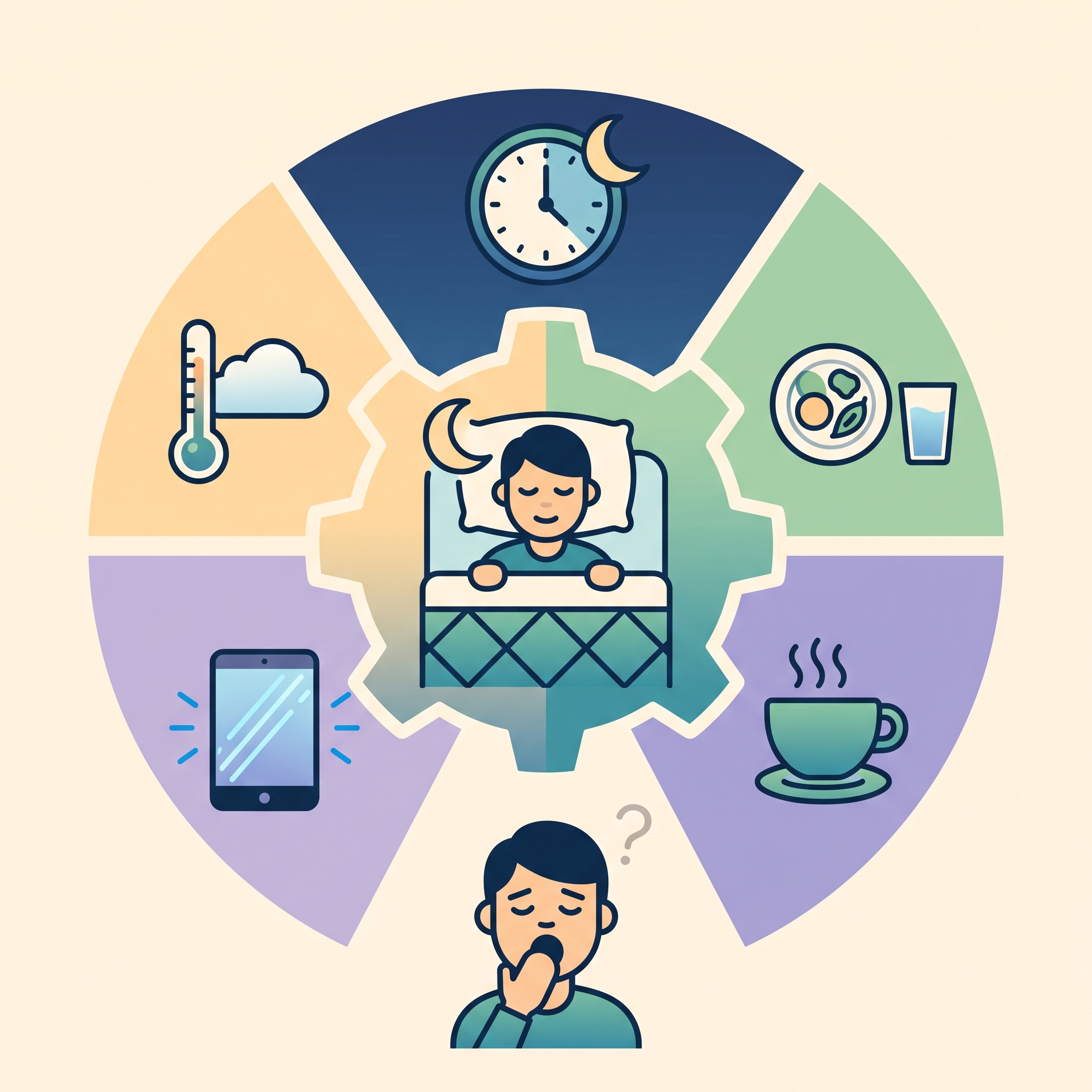
Someone might technically be in bed for eight hours but experience:
- Frequent awakenings
- Insomnia
- Restless sleep
- Sleep apnea
- Pain that interrupts sleep
- Alcohol-related sleep disruption
- An inconsistent sleep schedule
and wake feeling as though they barely rested.
Pay attention to how you feel when you wake up.
Do you usually feel reasonably restored?
Or does it feel as though sleep didn’t “work”?
Persistent daytime sleepiness, loud snoring, witnessed pauses in breathing, morning headaches, or routinely waking exhausted deserve discussion with a healthcare professional.
Connection #2: Your Body Clock
Your body operates on approximately 24-hour biological rhythms called circadian rhythms.
Light and darkness are major signals to this internal clock.
Your sleep schedule, meals, activity, and other behaviors also interact with it.
This helps explain why irregular schedules, overnight work, jet lag, and late-night light exposure can sometimes leave people feeling “off.”
One of the simplest ways to support your circadian rhythm is also free:
Get daylight during the day.
Morning and daytime light help reinforce the distinction between daytime activity and nighttime rest.
Combine that with a reasonably consistent wake time, regular movement, and a darker environment at night.
Simple doesn’t mean insignificant.
Connection #3: Nutrition
Food provides the raw materials your body uses to function.
That doesn’t mean there is a magical “energy food.”
Instead, look at the overall pattern.
Meals built around:
- Vegetables and fruit
- Whole grains
- Beans and legumes
- Nuts and seeds
- Appropriate sources of protein
- Healthy fats
provide carbohydrates, fats, protein, vitamins, minerals, fiber, and other compounds your body needs.
Extreme restriction, chronically inadequate calorie intake, or a nutritionally poor diet can contribute to low energy.
So can deficiencies in particular nutrients.
Iron, B12 and Other Nutrients Matter
Sometimes fatigue isn’t a motivation problem.
It’s a physiology problem.
For example, iron-deficiency anemia reduces the blood’s ability to carry oxygen effectively and can cause fatigue, weakness, shortness of breath, dizziness, and problems concentrating.
Vitamin B12 deficiency can also cause fatigue and weakness and, in some cases, neurological symptoms.
This is why randomly taking supplements isn’t necessarily the answer.
If a deficiency is suspected, appropriate testing can help identify what is actually needed.
More isn’t always better, and supplements aren’t substitutes for diagnosing the reason someone feels unwell.
Connection #4: Blood Sugar and Eating Patterns
Your body works hard to keep blood glucose within a usable range.
Meals composed largely of highly refined carbohydrates can produce different glucose and insulin responses than meals containing fiber, protein, healthy fats, and minimally processed carbohydrate sources.
You don’t need to fear carbohydrates.
Instead, think balance.
For example:
Instead of eating only a pastry for breakfast, consider combining foods that provide protein, fiber, and healthy fats.
Instead of thinking:
“What food gives me instant energy?”
think:
“What eating pattern supports me throughout the day?”
For people with diabetes or concerning symptoms of high or low blood sugar, individualized medical guidance is important.
Connection #5: Movement
This one seems backwards.
“If I’m tired, why would I exercise?”
Because the human body is designed to move.
Regular physical activity supports cardiovascular health, muscle function, metabolism, mood, sleep, and overall health.
Current public-health guidance recommends that adults work toward at least 150 minutes of moderate-intensity activity each week, plus muscle-strengthening activities on at least two days.
But don’t let that number stop you from starting.
If you’ve been sedentary:
Start with ten minutes.
Walk around the block.
Garden.
Stretch.
Take the stairs.
Dance in your kitchen.
Movement doesn’t have to happen in a gym to count.
And some activity is better than none.
Connection #6: Stress
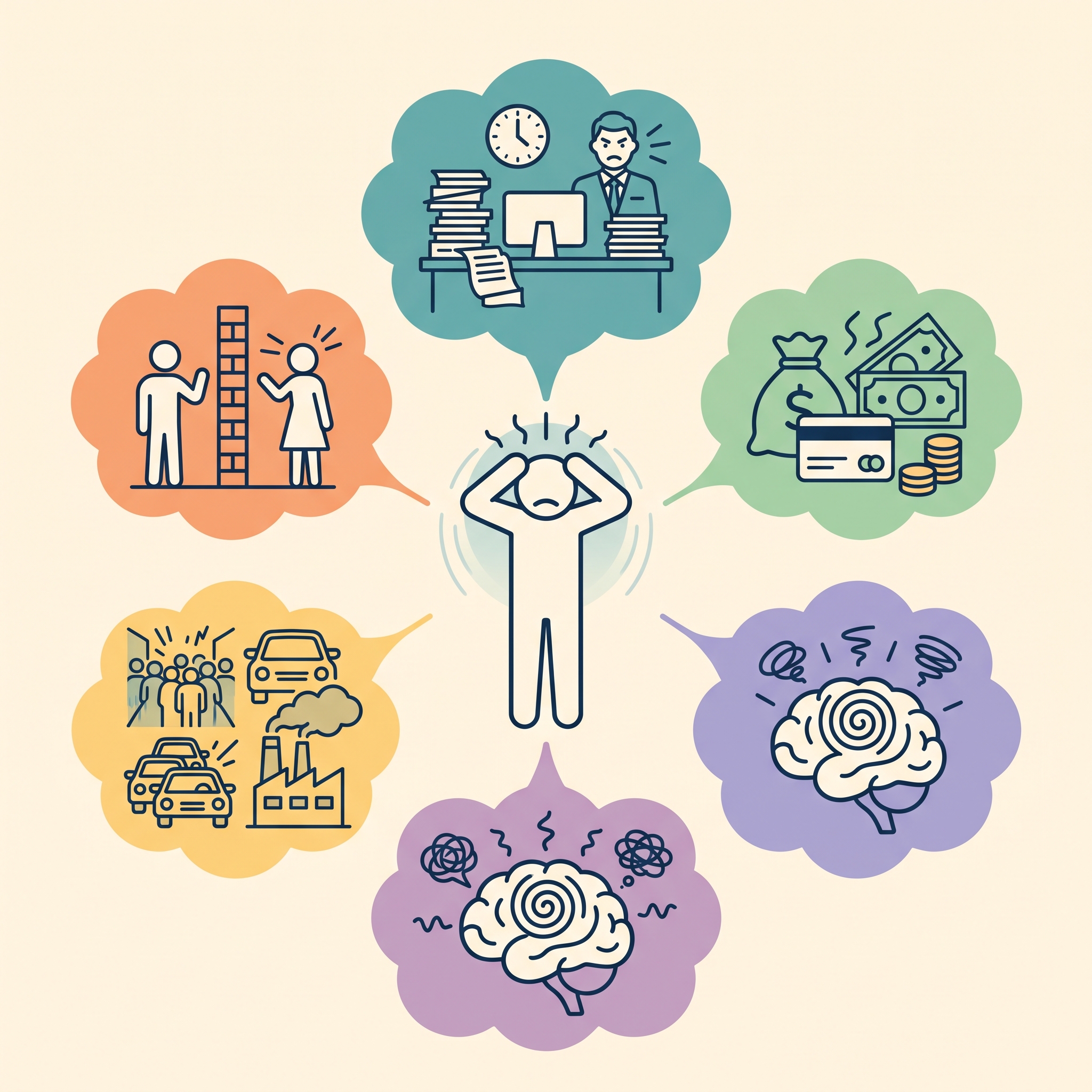
Stress requires energy.
When your brain perceives a challenge, your body can activate the fight-or-flight response.
Heart rate changes.
Breathing changes.
Muscles tense.
Stress hormones are released.
That’s incredibly useful when you need to respond to an immediate challenge.
But living in a constant state of high alert is different.
Long-term stress can affect sleep, digestion, mood, concentration, and other aspects of health.
Sometimes the person saying:
“I have no energy.”
isn’t doing too much physical activity.
They’re carrying too much mental and emotional load.
Rest isn’t always sleeping.
Sometimes rest means allowing the nervous system to stop responding to the next demand.
Connection #7: Inflammation
This is where WKC-002: The Complete Guide to Chronic Inflammation connects directly with this discussion.
Inflammation is an essential part of immune defense and tissue repair.
But persistent inflammatory activity can accompany many illnesses and health conditions, and fatigue commonly occurs during inflammatory and infectious processes.
The important distinction is this:
Fatigue does not prove that someone has chronic inflammation.
Feeling tired has too many possible causes for us to make that assumption.
Instead, inflammation is one piece of a much larger puzzle.
Connection #8: Gut Health
Our first Knowledge Guide explored the gut microbiome and the many ways the digestive system communicates with other parts of the body.
The gut influences nutrient digestion and absorption and interacts extensively with the immune and nervous systems.
If someone has ongoing digestive symptoms, poor nutrient absorption, restrictive eating, or a gastrointestinal condition, fatigue can sometimes accompany the underlying problem.
But again, we don’t want to oversimplify.
The statement:
“Your fatigue comes from your gut.”
is far too broad.
A better statement is:
Digestive health is one of many factors that can influence overall wellness and energy.
That’s an important difference.
Connection #9: Your Thyroid and Other Medical Conditions
Sometimes persistent fatigue has a medical cause that healthy lifestyle habits alone won’t fix.
An underactive thyroid, for example, can cause fatigue along with symptoms such as:
- Feeling unusually cold
- Constipation
- Dry skin
- Weight gain
- Muscle or joint discomfort
- Changes in hair
- Changes in mood
Fatigue can also occur with anemia, diabetes, heart disease, kidney or liver disease, infections, autoimmune conditions, chronic pain, depression, anxiety, sleep disorders, and many other conditions.
Certain medications can contribute as well.
That’s why persistent unexplained fatigue shouldn’t automatically be attributed to aging, stress, or “just being busy.”
“But I’m Getting Older. Isn’t Being Tired Normal?”
Energy can change with age.
Sleep patterns can change.
Muscle mass can decline.
Medical conditions become more common.
Medications may accumulate.
But persistent exhaustion should not automatically be dismissed as normal aging.
Healthy aging still includes:
- Regular movement
- Strength training when appropriate
- Good nutrition
- Social engagement
- Sufficient sleep
- Preventive healthcare
- Managing medical conditions
- Giving your body meaningful recovery time
Age may change the way we approach wellness.
It doesn’t make wellness irrelevant.
Everything Is Connected
Here’s the bigger picture:
- Sleep ↔ Energy
- Gut Health ↔ Nutrition ↔ Energy
- Stress ↔ Sleep ↔ Energy
- Inflammation ↔ Immune Activity ↔ Fatigue
- Movement ↔ Sleep ↔ Metabolic Health
- Nutrition ↔ Blood Health ↔ Energy
- Mental Health ↔ Sleep ↔ Motivation ↔ Energy
This is why we created The Wellness Knowledge Center.
Human beings aren’t collections of independent parts.
We are interconnected systems.
Energy Myths vs. Facts
MYTH: Being tired means you’re lazy.
FACT: Fatigue is a real symptom with many possible physical, psychological, lifestyle, and medical causes.
MYTH: More caffeine fixes fatigue.
FACT: Caffeine may temporarily improve alertness, but it doesn’t correct the underlying cause of persistent fatigue and can interfere with sleep when used too late or in excess.
MYTH: If I sleep eight hours, I can’t have a sleep problem.
FACT: Sleep quality matters as well as quantity. Disorders such as sleep apnea can disrupt restorative sleep even when someone spends adequate time in bed.
MYTH: Fatigue is just part of getting older.
FACT: While energy and sleep can change with age, persistent or unexplained fatigue deserves attention rather than automatic dismissal.
MYTH: I need an “energy supplement.”
FACT: If fatigue results from inadequate sleep, anemia, thyroid disease, a medication, sleep apnea, chronic stress, or another condition, a generic energy supplement doesn’t address the cause.
Seven Ways to Support Healthy Energy
1. Protect your sleep.
Give yourself enough opportunity to sleep and maintain a reasonably consistent schedule.
2. Eat real food regularly.
Build most meals around nutrient-dense foods rather than relying heavily on ultra-processed convenience foods.
3. Hydrate.
Don’t wait until evening to realize you’ve barely had anything to drink.
4. Move every day.
It doesn’t need to be strenuous. Consistency matters.
5. Get outside.
Daylight, movement, fresh air, and a change of environment can support healthy daily rhythms and well-being.
6. Create moments of recovery.
Your nervous system needs periods when nothing is demanding an immediate response.
7. Investigate persistent fatigue.
Don’t spend years trying supplements and wellness hacks while ignoring a symptom your body keeps repeating.
A Simple 7-Day Energy Reset
This isn’t a detox.
It isn’t a cure.
It’s simply an opportunity to observe how foundational habits affect the way you feel.
Day 1 — Sleep
Choose a realistic bedtime that gives you adequate opportunity to sleep.
Day 2 — Hydration
Drink water consistently throughout the day.
Day 3 — Food
Build one meal around vegetables, protein, fiber-rich carbohydrates, and a healthy fat.
Day 4 — Movement
Take a 20-minute walk if that’s appropriate for your health and ability.
Day 5 — Daylight
Spend some time outdoors during daylight hours.
Day 6 — Quiet
Take ten minutes without your phone, television, email, or other demands.
Breathe.
Read.
Pray.
Sit outside.
Simply stop.
Day 7 — Observe
Ask yourself:
What helped?
When was my energy best?
When was it worst?
How did I sleep?
What patterns did I notice?
Knowledge begins with paying attention.
Frequently Asked Questions
Why am I tired even after sleeping eight hours?
There are many possibilities, including poor sleep quality, sleep apnea or another sleep disorder, medication effects, stress, anemia, thyroid disease, depression, chronic medical conditions, and other causes.
If it happens regularly, discuss it with a healthcare professional.
Can dehydration make me tired?
Inadequate fluid intake can contribute to symptoms such as weakness or reduced physical performance, particularly when dehydration becomes significant. Hydration is one basic part of supporting normal function, but persistent fatigue shouldn’t simply be blamed on dehydration.
Can low iron cause fatigue?
Yes. Iron deficiency and iron-deficiency anemia can cause fatigue and weakness. Testing can help determine whether iron deficiency is actually present before supplementation is started.
Can stress really make me physically exhausted?
Yes. Stress is a biological response, not merely a thought or emotion. Chronic stress can disrupt sleep and affect many aspects of physical and mental health.
Is exercise good when I’m tired?
For many generally healthy people, regular appropriate physical activity supports health and can improve sleep and well-being.
However, new, severe, or unexplained fatigue—especially fatigue that worsens markedly after exertion—should be evaluated rather than simply pushed through.
When Should You Talk With a Healthcare Professional?
If fatigue lasts for several weeks, keeps returning, interferes with everyday life, or doesn’t improve despite adequate sleep and healthy habits, it’s worth discussing with a healthcare professional.
Seek evaluation sooner if fatigue accompanies symptoms such as:
- Unexplained weight loss
- Persistent fever or night sweats
- Shortness of breath
- Chest pain
- Fainting
- Significant weakness
- Blood loss
- New neurological symptoms
- Major changes in mood
- Loud snoring or witnessed pauses in breathing during sleep
Severe chest pain, severe breathing difficulty, stroke-like symptoms, fainting with concerning symptoms, or other emergencies require urgent medical attention.
Pam’s Perspective
One thing I’ve learned through my years in nursing and through my own wellness journey is how easy it is to normalize feeling bad.
We tell ourselves:
“I’m getting older.”
“I’m just busy.”
“Everybody’s tired.”
And sometimes we keep going for years without stopping to ask why.
I don’t believe every tired day needs an explanation. We’re human. Sometimes we’re simply tired.
But when fatigue becomes your normal, I think it’s worth becoming curious.
How am I sleeping?
What am I eating?
Am I moving?
Am I under constant stress?
Have I had appropriate medical evaluation?
What has changed?
You don’t have to become obsessed with your health.
You simply need to start paying attention to it.
That’s one of the reasons we created The Wellness Knowledge Center.
Knowledge gives us better questions. Better questions help us make better choices.
— Pam Keen, Founder, Regeneration Station
Key Takeaways
- Fatigue is a symptom, not a diagnosis.
- Sleep quantity and sleep quality both matter.
- Nutrition, movement, stress, gut health, inflammation, mental health, medications, and medical conditions can all influence energy.
- Persistent fatigue shouldn’t automatically be blamed on age.
- Supplements aren’t a substitute for identifying an underlying problem.
- Healthy energy begins with foundations—but persistent symptoms deserve evaluation.
Empowering Better Health Through Knowledge